
- Real Time Telematics Platform on MongoDB
- MongoDB Zero Shot Semantic Serach
- Building an AI-Powered Recommendation System using RAG, MongoDB, Ollama, and Gemini
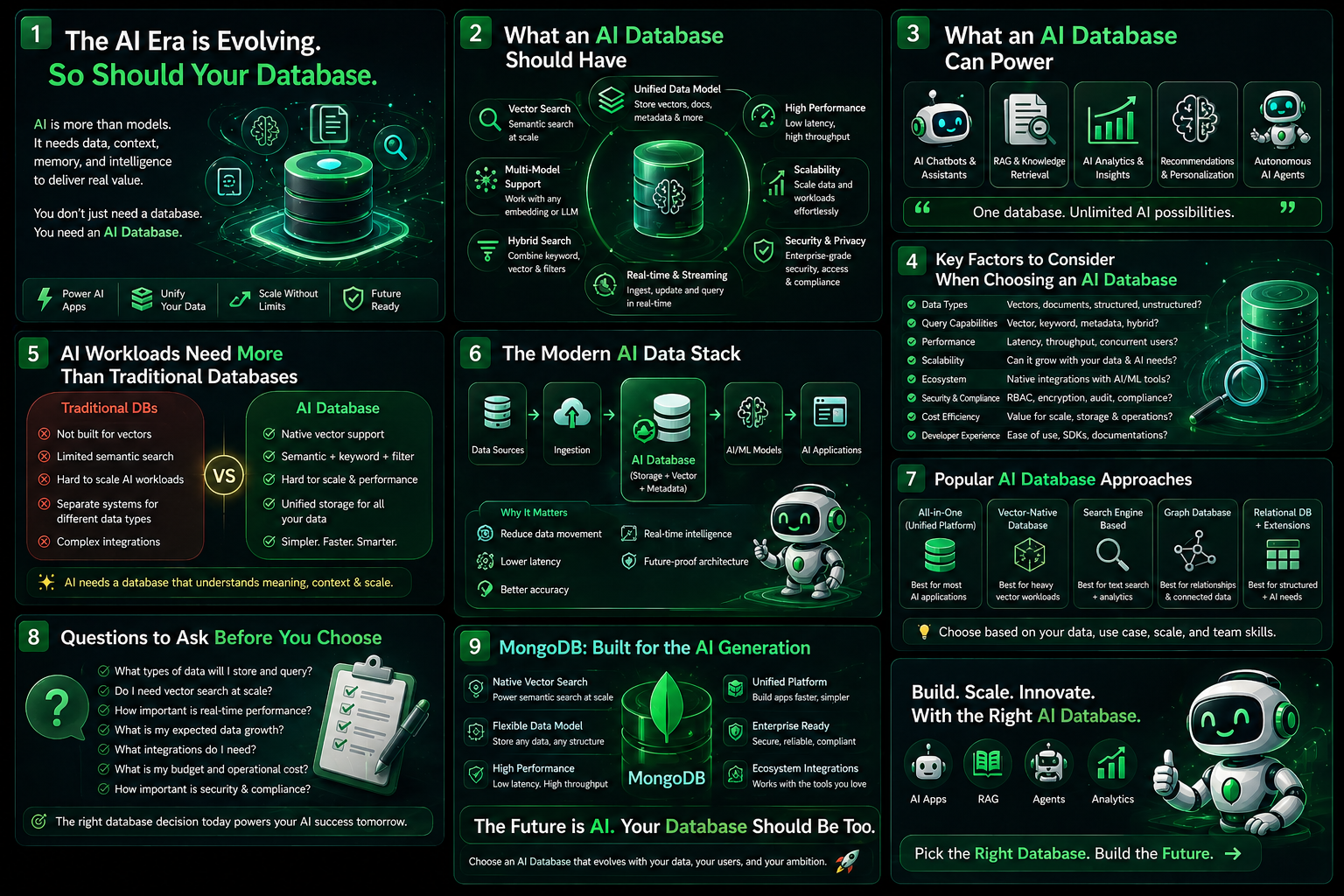
- AI Database Features
- Understanding Agentic AI: The Shift from Passive Models to Autonomous Agents
- The AI Blockchain
- Model Context Protocol (MCP) vs Agent to Agent (A2A) Protocol
- Responsible AI
- Building a CI/CD Pipeline for Machine Learning Using AWS Services
- DeepSeek Architecture
- Machine Learning for Beginners. Your roadmap to success.
- The Machine Learning Algorithms List: Types and Use Cases
- Harnessing Machine Learning for Advanced A/V Analysis and Detection
- TensorFlow Lite vs PyTorch Mobile for On-Device Machine Learning
- Generative AI presents new opportunities for accelerating human achievement
- Unlocking the true potential of AI with UiPath business automation
- AI for good: Three principles to use AI at work responsibly
- Transforming healthcare document processing with AI

Understanding Agentic AI: The Shift from Passive Models to Autonomous Agents
This is the first part of our Agentic AI blog series. In this blog, we’ll explain what Agentic AI really means in simple terms. You’ll learn how it’s different from normal AI, why it’s becoming popular in 2025, and how it helps AI systems think, plan, and take actions on their own—just like a smart assistant that can work with you. If you're curious about how AI is getting smarter and more useful, this is the perfect place to start.
Introduction
Agentic AI is no longer just a research concept—it’s becoming the backbone of modern AI systems. From automating complex workflows to enabling AI to reason, remember, and interact like human teammates, agentic frameworks are rapidly reshaping how intelligent systems are built. In 2025, the ecosystem has expanded significantly, with powerful frameworks like LangChain, AutoGen, and CrewAI enabling robust, multi-agent architectures.
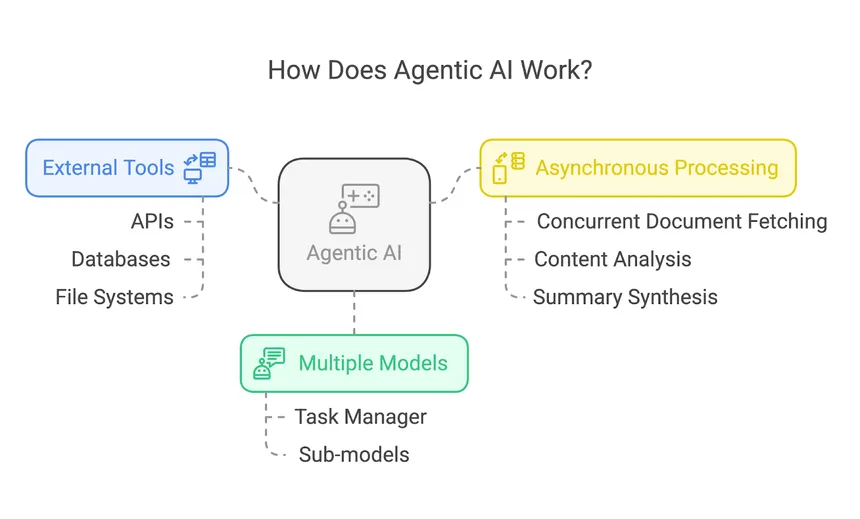
🧠 What is Agentic AI?
Agentic AI refers to AI systems designed to act as autonomous agents. Unlike traditional AI models that respond passively to inputs (e.g., chatbots or classifiers), agentic AI takes initiative, makes decisions, and performs multi-step tasks—often with minimal human intervention.
At its core, an agent in AI is a system that:
- Perceives its environment (via APIs, sensors, or documents),
- Decides what to do (using reasoning, planning, or prompts),
- Acts to achieve goals (through tools, APIs, or other agents),
- And can learn from experience or remember context.
🎯 Key Characteristics of Agentic AI:
| Characteristic | Description |
|---|---|
| 🔁 Autonomy | Agents can take actions without constant user input |
| 🧠 Memory | They can recall past conversations, actions, or retrieved knowledge |
| 🔧 Tool Use | Agents can call external tools (APIs, search engines, code runners, etc.) |
| 🧩 Reasoning | Capable of planning multi-step tasks and adapting as needed |
| 👥 Multi-Agent Systems | Some frameworks enable agents to collaborate like teams |
📌 Real-World Analogy
Imagine a smart virtual assistant that not only books your flight but also:
- Checks your calendar,
- Finds the cheapest combination of flights and hotels,
- Calls the customer service hotline if something breaks,
- And reminds you to pack based on your past trips.
That’s not just AI. That’s agentic AI — self-driven, context-aware, and action-oriented. (we will be building something like this soon in future part of this series :) )
🧭 Why It Matters
As AI systems become more powerful, static prompting or simple Q&A interactions aren’t enough. To truly act, reason, and collaborate, we need systems that behave like agents, not just models. Agentic AI marks this shift—bridging the gap between intelligence and autonomy.
📅 Why Agentic AI is Important in 2025
In 2025, Agentic AI is more than just a concept—it’s becoming a real part of how people and businesses use AI every day.
Big tech companies like Microsoft, OpenAI, Anthropic, and Google are now building AI systems that don’t just answer questions—they think, plan, use tools, and work like smart digital teammates.
- Microsoft has added powerful AI agents into tools like Copilot, which can now manage tasks on its own and even act like a site reliability engineer (SRE).
- Anthropic's Claude 4 now supports memory and tool use, meaning it can remember things you’ve told it and take action using tools or code.
- OpenAI is building AI agents that can write, test, and deploy code automatically using cloud tools—like a junior developer that works 24/7.
- Mastercard has started building systems where AI agents can make payments securely, with built-in consent and traceability.
These changes show that AI is moving from just answering questions to actually doing work—and that’s exactly what Agentic AI is about.
🧾 Conclusion
Agentic AI is changing the way we think about artificial intelligence. Instead of just responding to commands, these new AI systems can plan, decide, use tools, remember things, and act on their own—just like a helpful assistant who works with you.
In 2025, this shift is becoming real. From big companies like Microsoft and OpenAI to tools used by developers and businesses, Agentic AI is now at the center of AI innovation. Understanding what it is and how it works is the first step toward building smarter, more useful AI solutions.
📘 What’s Next?
In the next part of this series, we’ll compare some of the top Agentic AI frameworks—like LangChain, AutoGen, CrewAI, and more—to help you understand how they work, what they offer, and which one might be right for your use case.
Stay tuned! 🚀












Subscribe to our mailing list to get the new updates!

Subscribe our newsletter to stay updated